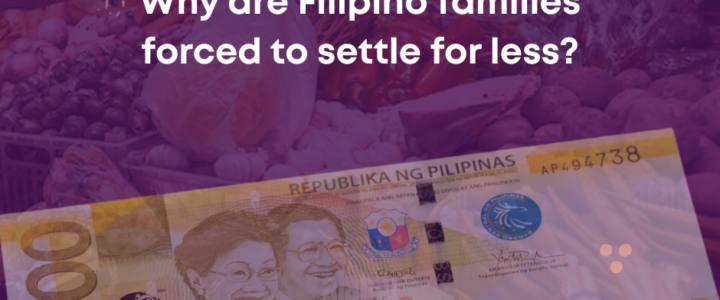
On the P500.00 Noche Buena: Why are Filipino families forced to settle for less?

On the P500.00 Noche Buena: Why are Filipino families forced to settle for less?

The Center for Women’s Resources (CWR) raises serious concerns over the Department of Trade and Industry’s (DTI) recommendation of a ₱500 Noche Buena budget. While cost-saving guidance can be helpful, proposing this amount as a sufficient budget for a traditional holiday meal does not reflect the actual conditions faced by women and their families today.

Yet whether this amount is adequate is not even the most important question. The real question is: Why are Filipino families continually expected to make do with so little? Why is the burden always placed on households to “adjust” instead of on institutions to address the root causes of rising costs?

This kind of narrative does more than downplay the difficulty of preparing a holiday meal – it justifies the continued government inaction on the widespread economic insecurity affecting the majority of Filipinos. By focusing on how families can stretch ₱500, we divert attention from the far more urgent issues that demand action.

A dignified Noche Buena should not be reduced to an unrealistic benchmark. Instead of focusing on whether ₱500 can somehow cover a Noche Buena budget, the conversation should center on raising wages, ensuring price stability, and securing genuine economic security for Filipino families. These are the solutions that will allow households not just to get by during the holidays but to live with dignity year-round. #

Honoring Women Workers of the Philippines on Bonifacio Day

Honoring Women Workers of the Philippines on Bonifacio Day

On Bonifacio Day, we honor the courage of workers who rose against colonial oppression. Yet today, Filipino women workers continue to face exploitation, discrimination, and insecurity in a semi-colonial, semi-feudal society mired in chronic crisis.

This chronic crisis stems from a system sustained by the collusion of big businesses, landlords, and economic elites and a corrupt, bureaucrat capitalist state. This enables the exploitation of cheap labor and extraction of wealth and resources through neoliberal policies designed to benefit political dynasties, big landlords and local and foreign corporate interests. The situation of Filipino women workers reflects neoliberal, pro-corporate policies. This includes the promotion of labor market flexibility at the expense of workers’ rights. Contractualization, a core mechanism of labor flexibilization, continues unabated across industries, trapping women in low-wage, non-regular, and precarious work. Wages determined under the Wage Rationalization Law are far from enough amid soaring prices of goods and services. In economic zones specifically in CALABARZON, women workers earn as little as ₱479 for a grueling 12-hour work shift. 

Economic vulnerability is made worse by austerity policies that starve social services. Households shoulder 44.7% of  health expenses, while regressive taxes such as the 12% Value Added Tax (VAT) squeeze women who already struggle to provide for their families. The erosion of public services on health, education, and social protection result from a state more committed to debt servicing, corporate incentives, and militarized programs, than to the welfare of workers and poor Filipinos. For instance, the 2026 national budget funnels ₱978.7 billion to debt payments – more than the combined budgets for health, housing, welfare, and agriculture.

Corruption and bureaucrat capitalism heightens this neglect. Public funds are systematically diverted toward patronage politics, defense spending, and unaccountable spending while essential services deteriorate. Executive offices, including the Office of the President (OP), secured ₱4.5 billion in Confidential and Intelligence Funds without public evaluation. Defense spending increased by 14% to ₱430.9 billion, while the Barangay Development Program (BDP) under the National Task Force to End Local Communist Armed Conflict ( NTF-ELCAC) tripled to ₱8.1 billion to fund questionable projects and red-tagging activities. 

The lived experiences of women workers reveal the real weight of these conditions. In March 2025, electronics workers of Nexperia held a three-day strike against low wages and illegal dismissals. According to the women workers, they were “sobra-sobrang naabuso, sobra ang trabaho, mababa ang sweldo, kulang sa benepisyo, walang job security” (excessively abused, overworked, low wages, lacking benefits, no job security). Some women workers also face gender-based harassment, including predatory propositions such as “sige ire-regular kita pero kita tayo mamaya” (I will regularize you, but let’s meet later). After the strike, union leaders faced harassment, including one worker who was visited 10 times by state representatives pressuring her to disaffiliate. Workers find unions extremely valuable because they allow them to voice concerns and defend their rights. 

The Center for Women’s Resources (CWR) joins all Filipinos in calling for urgent and comprehensive reforms to address these deeply entrenched injustices. We demand living wages, lower prices, an end to corruption, and the pursuit of national industrialization. We urge the passage of laws to ensure security of tenure, establish a national minimum wage, and protect workers’ right to organize and unionize. To advance these, we emphasize the need to support  all forms of collective action led by the working class people to push forward these reforms.

This Bonifacio Day, CWR reminds the people that the struggles of today’s women workers are a continuation of the same spirit of resistance, courage, and commitment to justice that Bonifacio embodied. Their fight is part of the larger struggle for justice, dignity, and national freedom. #

On IDEVAW, CWR Highlights Rising Violence and Demands Justice for Women and Girls

On IDEVAW, CWR Highlights Rising Violence and Demands Justice for Women and Girls

The Center for Women’s Resources (CWR) joins the global observance of the International Day for the Elimination of Violence Against Women (IDEVAW) this November 25, a date that marks the brutal assassination of the Mirabal sisters – political activists murdered in the 1960s in the Dominican Republic under the Trujillo regime. Their legacy endures as a powerful symbol of women’s resistance to state repression, gender-based violence, and systems that silence and endanger women. 

Today, IDEVAW stands as a global call to raise awareness, demand accountability, and work toward ending violence against women and girls. It reminds us that such violence is not inevitable. It can be prevented, but it requires collective action.

Violence against women (VAW) persists at alarming levels. Globally, one in every  three women experience physical or sexual violence in her lifetime. In the Philippines, the Philippine National Police (PNP) recorded 12,046 cases of VAW from January to November 2024, indicating that approximately 36 women are subjected to violence every day. Yet only one in 10 cases is reported. Many women remain silent due to victim blaming, lack information about where to seek help, and deep distrust in authorities. 

Survivors are often made to feel responsible for the abuse they endured – discouraging them from speaking out or seeking support. This silence is reinforced by repeated experiences of harassment, neglect, or worse, violence from individuals in positions of power. 

Some women face heightened risks, particularly during crises. In poor and marginalized communities, disasters, economic instability, and displacement exacerbate women’s vulnerability. In rural and militarized areas, intensified military operations expose women and children to increased threats of  abuse, exploitation, and gender-based violence.

These conditions persist because violence is rooted in a feudal-patriarchal system that shapes social institutions such as the family, religion, education, and mass media. This system upholds unequal power relations, expecting  women to be obedient and dependent, while protecting those who wield authority from accountability. The result is a toxic combination of victim blaming, a culture of silence, and widespread impunity that normalizes violence and prevents women from seeking or obtaining justice.

As we commemorate IDEVAW, CWR reiterates its call for urgent and concrete action. Laws must not only be strengthened but fully and consistently implemented, Ending violence requires not only policy but also public investment in shelters, safe spaces, and free, accessible, and survivor-centered services. 

It must be reiterated, violence thrives where poverty is widespread. It worsens when resources are plundered, when corruption diverts public funds away from social services, and where the systems of power remain unaccountable. Communities must be empowered to challenge these, confront impunity, and dismantle the structures of oppression and exploitation that place women at risk.

CWR stands with all women who continue to resist abuse, corruption, and impunity. We call on the public to learn, speak out, organize, and act. Violence against women is not only a women’s issue—it is a societal crisis that demands our collective courage, commitment, and action.
MULAT Solidarity Activity

MULAT Solidarity Activity

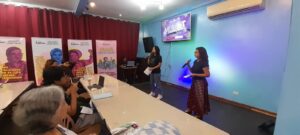
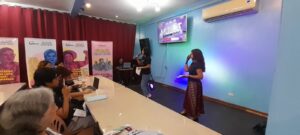
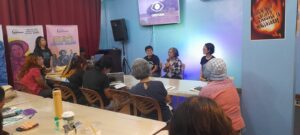
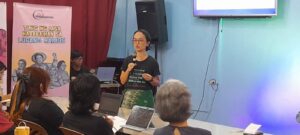
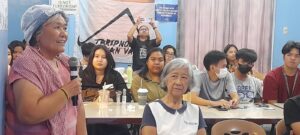
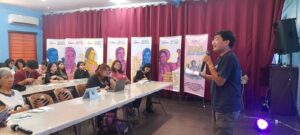
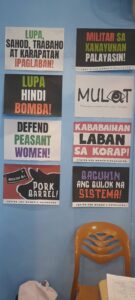
Mamamayang Lumalaban sa Anomalya at Katiwalian (MULAT) is a campaign initiative that seeks to open the public’s eyes to the systemic roots of corruption through interactive, cultural, and educational activities across diverse spaces. The campaign aims to educate, amplify women’s voices, and inspire collective action toward justice and accountability.

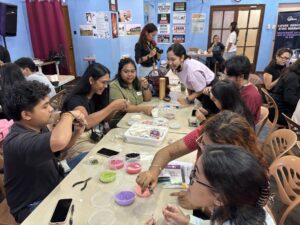
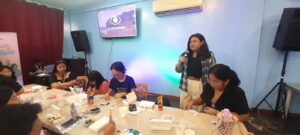
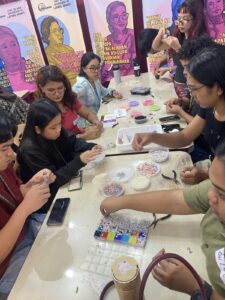
CWR in partnership with Amihan Federation of Peasant Women, Rural Women’s Advocates, Taripnong Cagayan Valley held a solidarity event featuring grassroots speakers discussing the impacts of corruption on peasant women and followed by a jewelry-making workshop as a creative act of solidarity and empowerment.

The event was held October 27, 2025 at SIKAT events place and participated by students, women from different organizations and academe.