The recent school shooting in Tacloban, Leyte, is a tragedy that demands accountability – not from children, but from a government that has long neglected the needs of Filipino youth. Rather than being treated as an isolated incident, this tragedy exposes deep systemic failures that continue to place young people at risk.
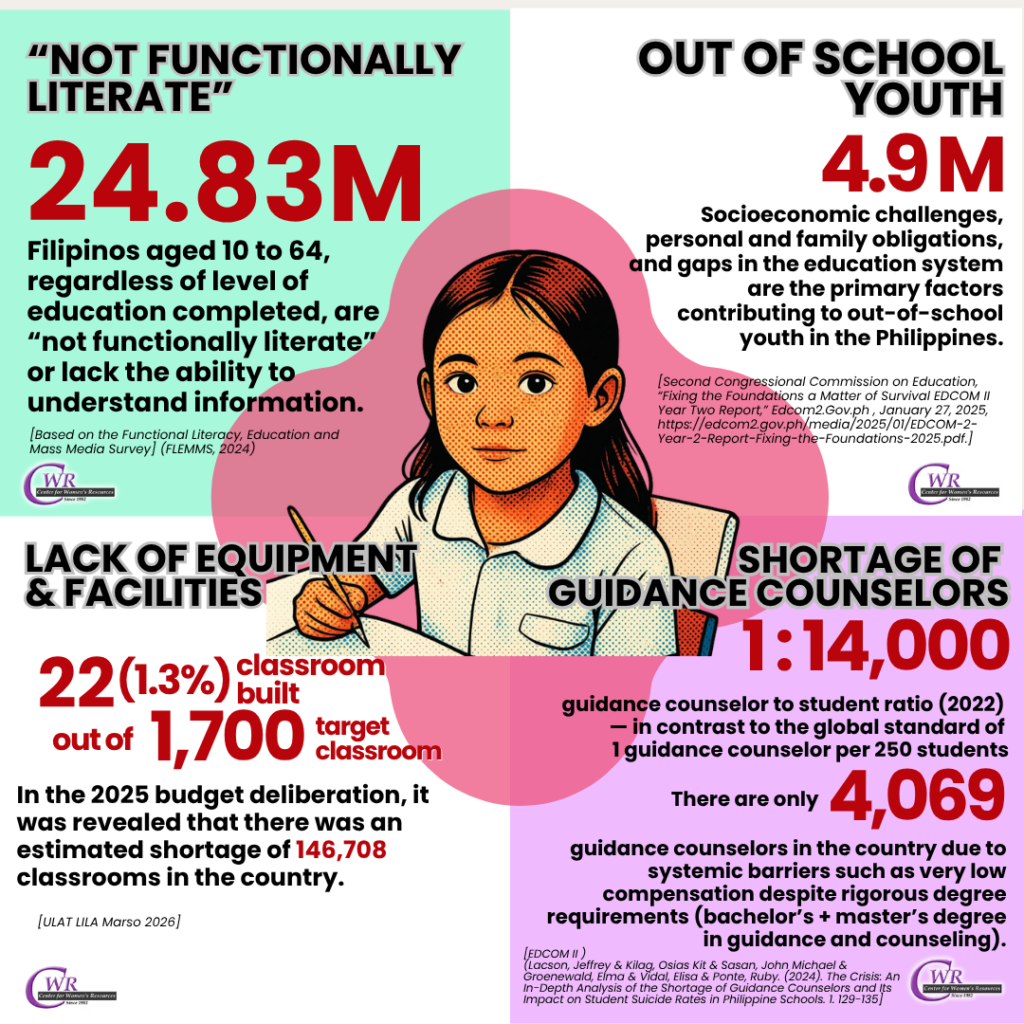
Millions of Filipinos lack access to quality education, while our schools continue to suffer from chronic shortages of classrooms, facilities, guidance counselors, and mental health services. Nearly 5 million youth are out of school and more than 24 million Filipinos are not functionally literate. Yet instead of addressing these long-standing problems, the government’s response remains one of neglect, underfunding, and punitive policies.
We reject any attempt to exploit this tragedy to justify harsher punishments against children. The real crisis is not a lack of criminalization, but the state’s failure to fulfill its responsibility to provide quality education, accessible mental health care, social protection, and meaningful opportunities for young people.
Likewise, proposals to lower the age of criminal responsibility will neither address the root causes of violence nor prevent similar tragedies from happening again. Nor will deploying more police in schools make students safer. Schools should be spaces of learning, growth, critical thinking, and care — not environments defined by surveillance, fear, and militarization. Accountability must also be demanded from adults entrusted with firearms. The weapons used in this incident belonged to adult gun owners, and responsibility cannot be shifted solely onto the minors.
Without addressing poverty, inadequate access to mental health services, and the social exclusion experienced by many young people, punitive measures and increased militarization will only exacerbate feelings of alienation and despair. Focusing on criminalizing children also diverts attention from those who bear the greater responsibility for ensuring safe and supportive learning environments: governments, communities, and adults entrusted with the welfare of children. True prevention requires a holistic approach that centers on social justice, equity, and empowerment of the youth.
What students truly need are guidance counselors, mental health professionals, social workers, effective child protection mechanisms, libraries, and adequate school facilities that nurture their well-being and development.
Children need guidance, care, and opportunities – not fear and punishment. Schools need adequate funding, qualified counselors, libraries, and safe learning environments. Communities need decent jobs, accessible social services, and hope for the future.
Safe schools are built through education, care, and social justice — not through fear, militarization, and criminalization.
The fight for safe schools is inseparable from the fight for a genuinely accessible, inclusive, and people-oriented education system.