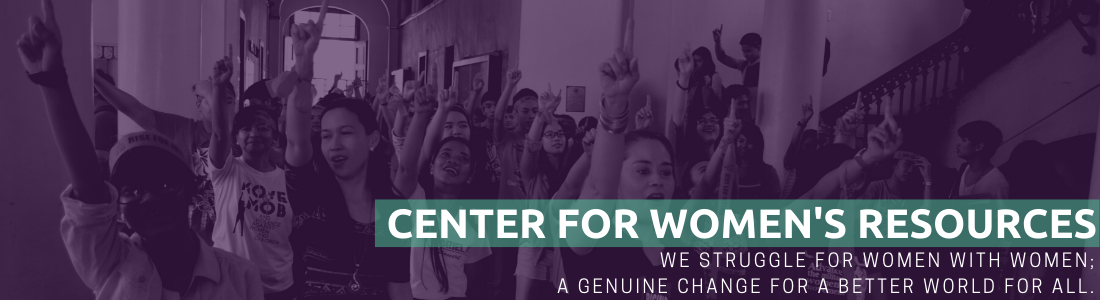
On International Working Women’s Day (IWWD), March 8, the Center for Women’s Resources (CWR) stands in solidarity with working-class women across the world who continue to confront deepening economic and social crises while resisting imperialist plunder, fascism, and patriarchal oppression.
This day is not merely a commemoration but a day of struggle – honoring the militant legacy of women workers who fought for bread and peace. Their call continues to resonate today in the ongoing fight for rights, dignity, and genuine liberation.
In the Philippines, a society marked by stark class inequality and persistent patriarchal structures, women—particularly poor and working-class women—experience intensified forms of exploitation and discrimination. Under the Marcos Jr. administration, millions of women face worsening economic insecurity. Women remain disproportionately concentrated in precarious and low-paying jobs, while rural women continue to suffer from landlessness and declining government support for agriculture. At the same time, soaring prices of basic goods, stagnant wages, and shrinking social services deepen the burden women carry in sustaining their families and communities.
These conditions are rooted in the deeper structural crisis of Philippine society and the continuing plunder of the economy by foreign capital. Women are among the most affected by this imperialist exploitation; they are displaced from their lands by foreign-owned mining operations and large agro-plantations, pushed into low-wage jobs in special economic zones where a race to the bottom in wages and labor standards prevails, and forced out of their communities by large-scale infrastructure projects.
For decades, neoliberal policies of liberalization, privatization, and deregulation have put the needs of big businesses and foreign investors ahead of building up national industries and strengthening domestic agriculture. As a result, the Philippine economy remains dependent on exporting cheap labor and importing basic goods. Workers, peasants, and marginalized sectors bear the heaviest burdens of economic maldevelopment.
The country’s policy of exporting workers continues to be a lifeline for a struggling economy, which forces many women to move or work in unsafe conditions abroad. Filipino women migrants face various forms of exploitation and vulnerability while providing crucial remittances that sustain millions of households.
Persistent corruption and entrenched bureaucrat capitalism, which uses political power to advance private interests, further aggravate these conditions. Instead of funding essential services such as healthcare, education, and programs addressing violence against women and children, public funds are systematically siphoned off by a few.
Militarization and fascist attacks against the people, including women, also continue amid growing public discontent. According to Karapatan, more than 11 million people have been victims of various forms of human rights violations from July 2022 to November 2025. There are nearly 700 political prisoners in the country, including 136 women, with 163 arrested under the Marcos Jr. administration. The government further endangers the Filipino people by deepening military ties and allowing expanding the presence of US forces in the country, dragging the Philippines into escalating geopolitical tensions and militarization in the region.
Yet amid worsening conditions, Filipino women continue to organize, resist, and fight back. Women workers lead strikes for higher wages and better working conditions. Peasant women advance struggles for land and rural justice. Women in communities, schools, and grassroots organizations stand at the forefront of campaigns demanding accountability, social services, and democratic rights.
These struggles reaffirm a fundamental truth: we cannot separate women’s liberation from the broader struggle of oppressed nations and exploited classes. Genuine emancipation for women will not come from token reforms or empty promises from those in power, but from the organized strength of women and the people.
On this International Working Women’s Day, CWR calls on all working-class women to strengthen our resolve to build stronger unions, workers’ organizations, grassroots movements, and alliances with other sectors. As we organize in our communities, we confront not only immediate injustices but also the broader systems that perpetuate exploitation and oppression across borders.
By linking our struggles with those of women and peoples around the world resisting imperialism, exploitation, and patriarchal oppression, we strengthen the collective power needed to achieve genuine social transformation. #
- Ulat Lila 2026: How Filipino Women Are Resisting Crisis and Corruption -Quezon City, March 3, 2026
- Women’s Group Warns: Emergency Powers Won’t Solve Fuel Crisis — Scrap Fuel Taxes Now