
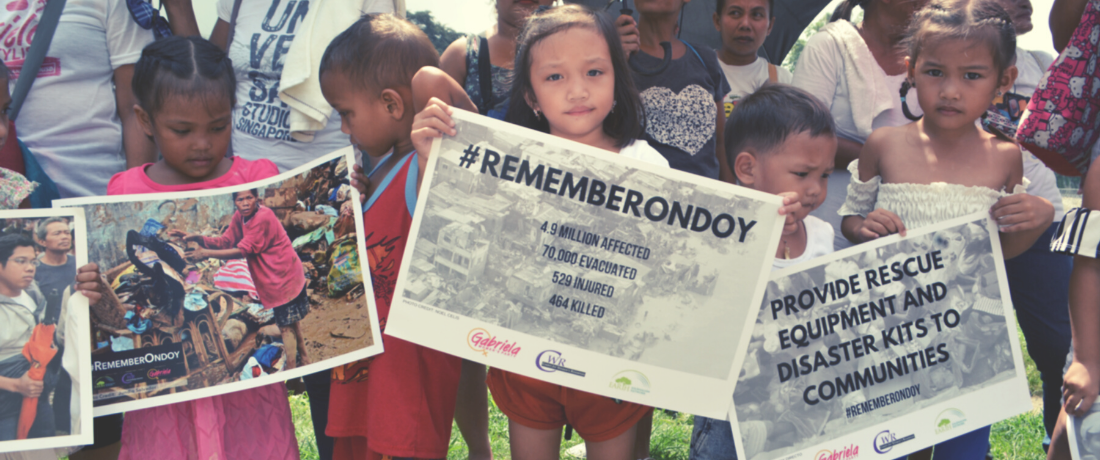
Survivors and their children gathered in Marikina to commemorate the 10th anniversary of Typhoon Ondoy.
PH political dynasties strip peasant women of their right to land and life
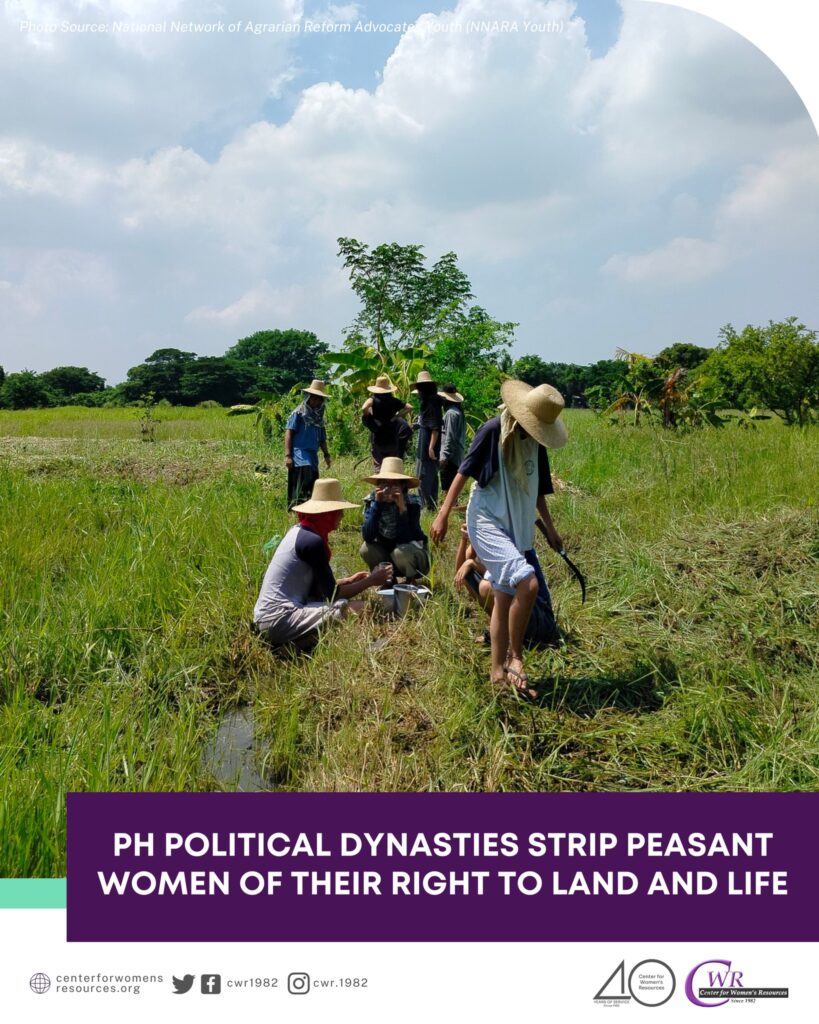
The Center for Women’s Resources joins peasant groups and advocates in reiterating calls for genuine land reform amidst rampant landlessness, land grabbing, land-use conversion, and displacement of peasant families. Peasant groups and advocates underscore the crucial role played by political dynasties in perpetuating corruption and in exacerbating poverty and landlessness in the country.
The political landscape in the Philippines remains dominated by landlords and business elites with vested interests to maintain a system that strips peasant women of their right to land and life. By occupying political positions while controlling vast agricultural estates, they shaped economic policies that prioritize their own economic and political interests over the needs of the rural poor.
Alongside land grabbing, displacement, and land use conversion, repression and attacks against the farmers remain rampant under the current administration of Ferdinand “Bongbong” Marcos Jr. In the Southern Tagalog region, the Santa Rosa Realty Development Corporation (SRRDC) attempted to displace farmers of Barangay Casile, Cabuyao by blocking 24 hectares of farmland and affecting the mobility of 11 families in their community.
The SRRDC is constructing fences for a major road project to connect Casile with the Cavite-Laguna Expressway (CALAX) without valid permits or prior consultation with local farmers. Barangay Casile is part of the 7,100-hectare Hacienda Yulo, controlled by cronies of the late dictator Ferdinand Marcos Sr. Farmers there have faced threats and eviction attempts from Yulo-Ayala security forces for four years, with armed goons raiding and burning homes of farmer leaders.
In Occidental Mindoro, 29 Mangyan Iraya residents from Hacienda Almeda in Abra de Ilog were forcibly detained by private goons and police. Families of these Mangyan Iraya residents – 17 elders and 12 minors have lost contact with their loved ones and without news of their whereabouts.
The Irayas have been victims of harassment, enforced disappearances, and killings since the 1990s. The lands seized by Hacienda Almeda Inc. and real-estate developer Pieceland Corporation include the Iraya’s settlements, sacred groves, burial sites, watersheds, and sources of livelihood across approximately 1,546 hectares. This is despite multiple rulings in favor of the farmers and the Iraya Mangyan, the Almeda family continues to exploit loopholes in the bogus and failed CARP to delay and obstruct the redistribution of land.
We stand in solidarity with peasant women fighting for genuine land reform. Their demand for land is an assertion of economic survival, dignity, and life. Their courage in the face of oppression is a testament to their strength. By dismantling the system of political dynasties , we can ensure the peasantry’s rightful access and control over land and resources, and create a future where justice and life thrives. #