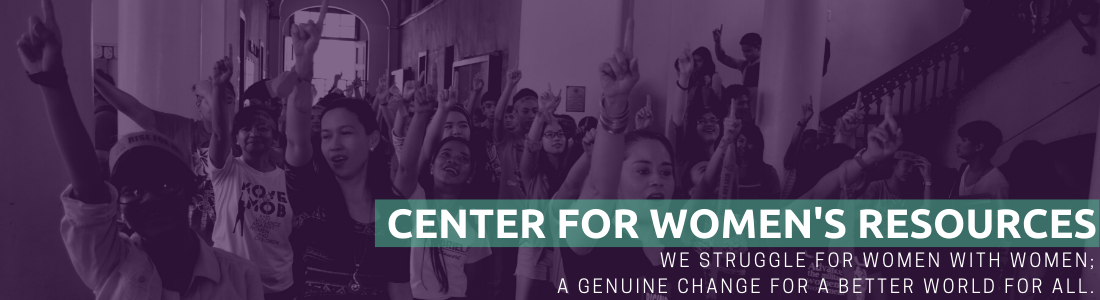
As the Philippines hosts the 49th Association of Southeast Asian Nations (ASEAN) Summit and Related Summits on November 16–18, research institution Center for Women’s Resources (CWR) warns that the region’s push for trade liberalization, foreign investment, and deeper economic integration will further expose women workers to low wages, insecure employment, and exploitation as their rights and welfare remain secondary to corporate interests.
ASEAN governments continue to promote regional economic integration as a pathway to growth and development. However, for CWR, this model reinforces dependence on foreign capital, export-oriented production, and cheap labor instead of building strong domestic industries and agriculture that can provide stable livelihoods and decent wages.
In the proposed ASEAN Digital Economy Framework Agreement (DEFA), scheduled to be signed during the summit, the oppressive situation of women workers will be further exacerbated . Governments promote digitalization and cross-border trade as growth opportunities, but CWR cautions that the expansion of digital markets without enforceable labor protections could worsen contractualization, job insecurity and the concentration of economic power in large corporations and technology companies. Women in the service, retail, business process outsourcing, and gig economy sectors are particularly vulnerable.
Data from CWR’s Ulat Lila (Purple Report) 2026 shows that more than 20 million women live in economic insecurity due to low income, lack of employment and livelihood opportunities and insecure work. Many remain concentrated in informal and vulnerable occupations without adequate wages, benefits, or social protection.
The country’s reliance on labor export is another indication of the failure to create decent work at home. About 2.19 million overseas Filipino workers were deployed in 2024, of which 1.25 million or 57.2 percent were women. More than two-thirds of these women were employed in elementary occupations where low pay and precarious working conditions still prevail. Women migrant workers also face risks of illegal recruitment, trafficking, labor exploitation, and abuse.
“Economic integration cannot be termed inclusive when it relies on cheap labor and the displacement of workers, leaving women with little protection,” says Cham Perez, CWR’s executive director. “Real development requires national industrialization, genuine agrarian reform, decent wages, job security and full social protection – not deeper dependence on foreign capital and labor export,” Perez concludes.
CWR invites members of the media to cover the women’s press conference entitled “Filipino women ban Trump: No to imperialist plunder and war!” to be held on November 6, 2026, from 10:00 AM to 12:00 noon at the Kamuning Bakery, Quezon City. In anticipation of US President Donald Trump’s arrival for the ASEAN Summit, women’s organizations and advocates will gather to register their opposition to his visit and discuss the impact of US and ASEAN policies on Filipino women. CWR will present data on women’s economic conditions, exploitation, and insecurity. Media presence is requested to help amplify women’s voices and demands ahead of the summit.
