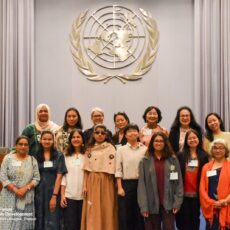

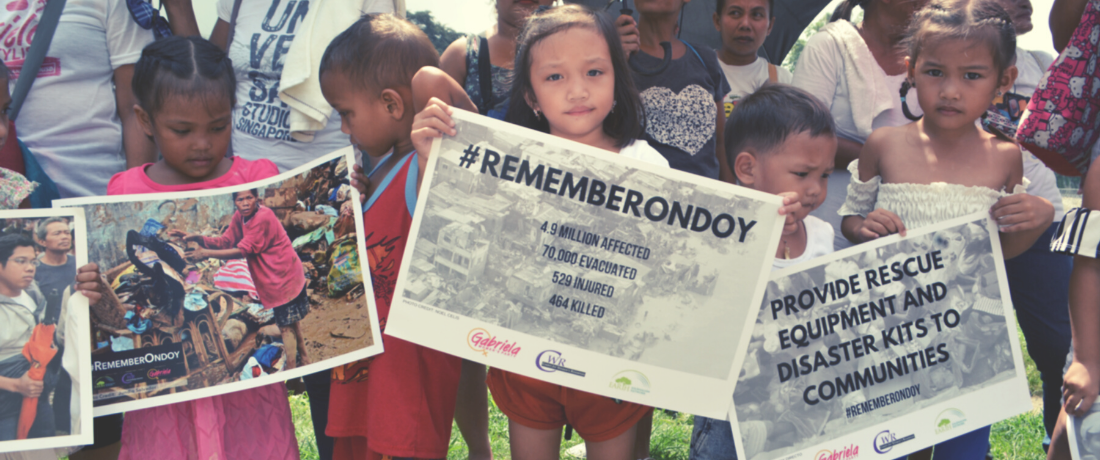
Survivors and their children gathered in Marikina to commemorate the 10th anniversary of Typhoon Ondoy.

Threats to PH sovereignty heightens as Pres. Marcos Jr. continues military agreements with US, enters dangerous waters with China
Pres. Marcos Jr. is entering dangerous waters by involving the Philippines in the geopolitical war between superpowers US and China. By allowing the participation of well-known US allies like South Korea, Australia and Japan, in this year’s Balikatan Exercises, Marcos Jr. is risking further alienating and potentially worsening relations with China. This decision could escalate tensions in the region and draw the Philippines further in the US-China conflict.
History has shown how such wars affect economies and people’s lives in developing countries that have little to no direct involvement in said conflicts. By agreeing to be a war zone for countries with their own for territorial interests, Pres. Marcos Jr. has consciously allowed the bombing and sinking of lives, security and interests of Filipinos he has sworn to serve. Foreign military exercises in the Philippines have profound and multifaceted impacts on women and children, ranging from displacement, human rights and sexual abuses to environmental damages.
Participation in this year’s Balikatan is set to be larger than before, involving 17,000 forces including around 5,000 AFP troops, 11,000 American soldiers, and support group members, government officials and civilian contractors. The Australian Defense Force and Japan Self Defense Force will participate as observers, with spectators from Japan, South Korea, India, Canada, United Kingdom, France, Thailand, Singapore, Vietnam, Indonesia, Brunei, Malaysia, Germany, and New Zealand.
The exercises become a show of force and display of the alliance between these countries in the WPS where Chinese forces are present, particularly in Mavulis island in Batanes, closest to Taiwan, and west of Palawan. This position diminishes the country’s ability to pursue an autonomous foreign policy and maintain a commitment to peace and mutual respect and collaboration with all nations.
Besides artillery drills, and search and seizure exercises, offensive naval training including sinking exercises or the attacking and sinking of enemy ships are expected to happen in Laoag. This is the first time that Balikatan will exceed the 12-nautical-mile limit, thus reaching international waters. Other drills such as amphibious operations, live-fire training, urban operations, aviation operations, counterterrorism, humanitarian assistance and disaster relief, among others are also expected. Newly-acquired weapon systems purchased through the heavy-funded AFP Modernization Program will also be tested including the SPYDER or “ground-based air defense system” acquired under Horizon 2 of the said program. Cyber security training and “information warfare” will also be highlighted in the exercises.
Further, while the Department of National Defense claims that the joint operations among the Army, Navy, and Air Force, in collaboration with foreign military forces under the Philippines’ new Comprehensive Archipelagic Defense Concept (CDAC), is a shift from internal to external defense, there is no clear indication of a departure from counterinsurgency priorities. The recent aerial bombings in Abra, which led to the evacuation of families, suspension of classes, and disruption of economic activities, are indicative of heightened counterinsurgency operations. The ongoing Balikatan exercises and the newly acquired weapon systems and training could potentially fuel further militarization in the country. In fact, since 2021, the US has supplied the Philippines with $2.1 billion worth of weaponry, including jet fighters, missiles, bombs, and howitzers.
The Center for Women’s Resources joins the Filipino people in opposing US war provocations and resisting Marcos Jr.’s excessive reliance on US dominance. Independence and sovereignty would mean nothing so long as uneven military agreements such as EDCA, MDT and VFA exist. We must unite to push for a truly independent foreign relations policy, and resist any attempt that would drag us in imperialist wars that only risks the lives of all Filipino people. #